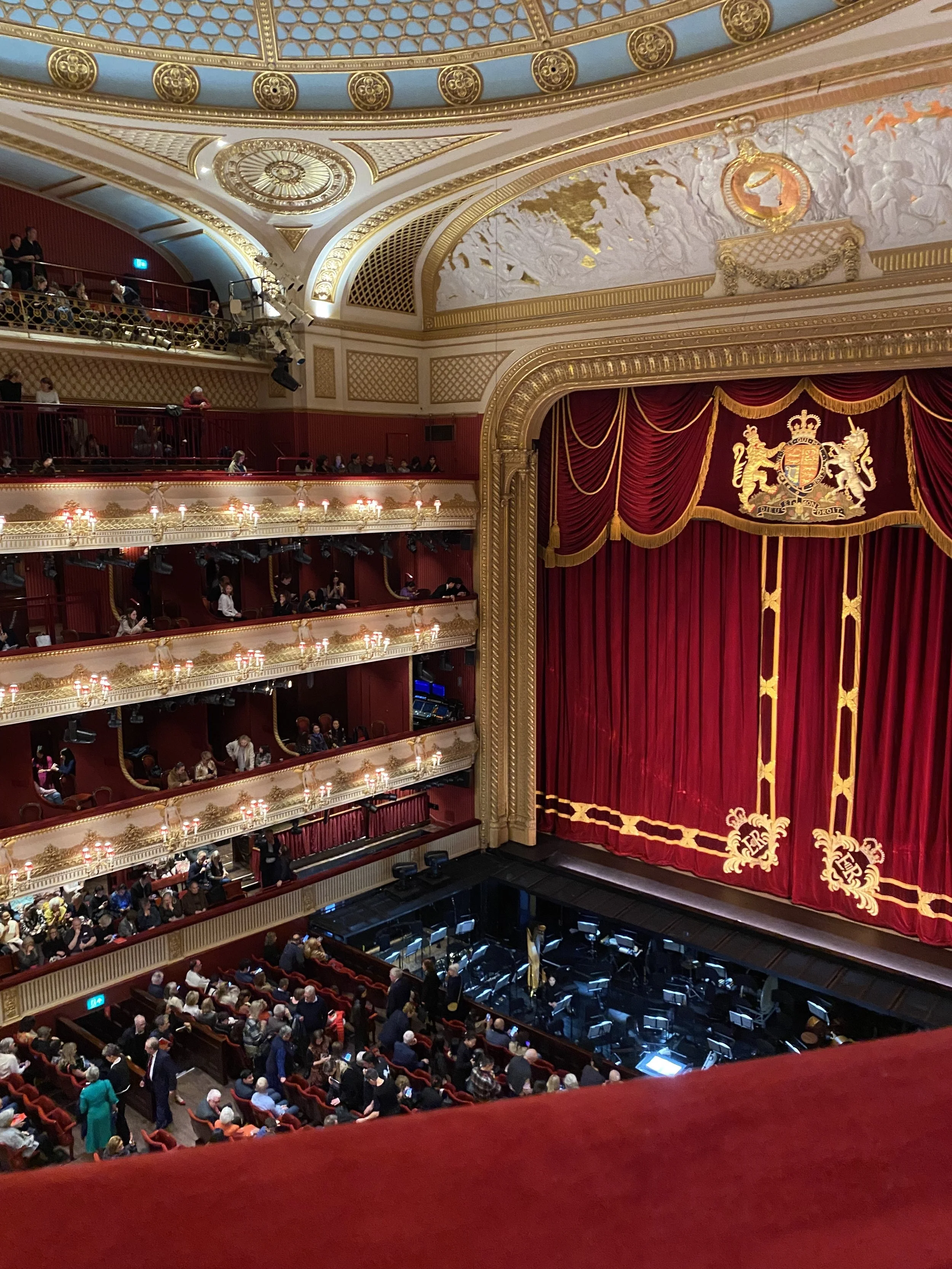
A packed Royal Opera House for The Royal Ballet’s La Fille mal gardée in 2025 © Like Nobody’s Watching
Timothée Chalamet is on a mission. A singular mission. For an Oscar. To be one of the greats.
So should we be surprised that he is a very commercially minded individual? To his mind, why would he bother working in industries which he views as less successful and money pits.
Let’s make no mistake, everyone who has been offended by Timothée Chalamet’s comments are perfectly allowed to be. The tone was disparaging and suggested that he, a commercially minded individual, wouldn’t be seen dead working in an industry which he views as financially ruined and struggling to pull in audiences. There’s a secondary question here about whether art should be deemed purely through a capitalist lens of financial success but that isn’t the question that’s got everyone talking. What ballet companies and artists are so desperate to disprove is that people don’t care about their art form. A belief that is so commonly held by the general public that an A-List celebrity felt able to use it as an illustrative point when discussing the direction cinema was heading.
And if it’s a commonly held perception, maybe there’s some truth behind it?
As a dance critic, I sit in packed opening nights at dance shows and witness many a passionate standing ovation from thousands of dance fans. There is an active audience for dance, indeed one TikTok commenter noted that shows are often more packed than cinemas. But, try as opera houses have to tell us otherwise over the past week, ballet (and opera) are niche art forms not enough people partake in. In my time working in ballet marketing, I saw countless research pieces be commissioned looking at the perception of ballet in the population, and the result was nearly always the same - its elitist, expensive and not for me. In fact, a YouGov poll in 2024 found that 81% of adults surveyed had never attended a ballet or contemporary dance show.
But should we really be surprised? Dance is hardly a part of UK culture right now, in fact I often lament that it’s the UK’s forgotten art form. Arts subjects in schools prioritise art and drama over dance (which is shrinking as an available subject). Therefore, dance is only available to children who can financially afford it and whose parents have an existing interest. Dance rarely escapes the depths of the culture pages (not helped by a lack of dance journalism opportunities, presence at major theatre awards and no obvious spokesperson to take over from Darcey Bussell), meaning that it rarely reaches the public through their general media consumption in the way sports and film does. If you never come across it and never hear about it, is it any wonder that very few people could probably name a choreographer? Meanwhile they will know who Mozart is and could name ten actors and three directors (whose work they may never have even seen for themselves). Therefore, of course to the general population ballet is dying and irrelevant.
If people aren’t attending regularly, then what, to Chalamet’s other point, is the financial state of ballet? Is it dying?
It’s almost a running joke that Nutcracker is the only thing keeping ballet companies alive. Indeed, Northern Ballet was struggling so much a couple of years ago that they stopped touring with an orchestra. Lesser known and newer works, unless linked to pop culture IP, are hard sells and can only run for a handful of dates to guarantee the theatre is full (and even then discreet discounting may be required). The Royal Ballet may have broken even in their 2023/24 Season, but their financial report shows that just 30% of their revenue came from ticket sales. The rest was bolstered by the government and donors.
But is there any good news to be had?
I set up Like Nobody’s Watching two years ago because even working in the dance industry I wasn’t aware of half the dance going on in the country. I wanted to explore and highlight dance hidden from view via a social media-first approach few others were doing. This led me to launch my monthly dance calendar of all the dance shows touring the UK and every month I am delighted to discover upwards of 40 shows touring at any one time. I have had the pleasure of reviewing classical Indian, contemporary, dance theatre and hip-hop companies, as well as ballet of course: there is a thriving creative scene in this country.
In the ballet world, internationally influential choreographer Wayne McGregor was knighted for his contribution to dance and recently held an exhibition at Somerset House. In the aforementioned financial report, the Royal Ballet and Opera reported that 51% of audiences were attending for the first time, they broadcast works to over 1000 cinemas internationally and had a social media following in the millions (it’s now even bigger). They, as well as other companies, also run schools outreach programmes to get children into ballet early in life. London City Ballet was also revived a couple of years ago, having gone on hiatus (due to financial issues) in the 90s. The brilliant team at Dance Consortium bring international dance groups to tour regional theatres and The Place runs a rural touring programme to bring dance to more remote places. Most telling of all, Sadler’s Wells recently invested in a brand new theatre dedicated to dance. Sadler’s Wells East in Stratford has given additional space for companies to bring work to the capital, meaning there is more dance being shown that ever before. With a statement like that, dance is far from dead.
Find your next dance show
Prove Timothée wrong by watching some of the great dance touring near you. Show lists released monthly.
More thought pieces