
Giselle, The Royal Ballet
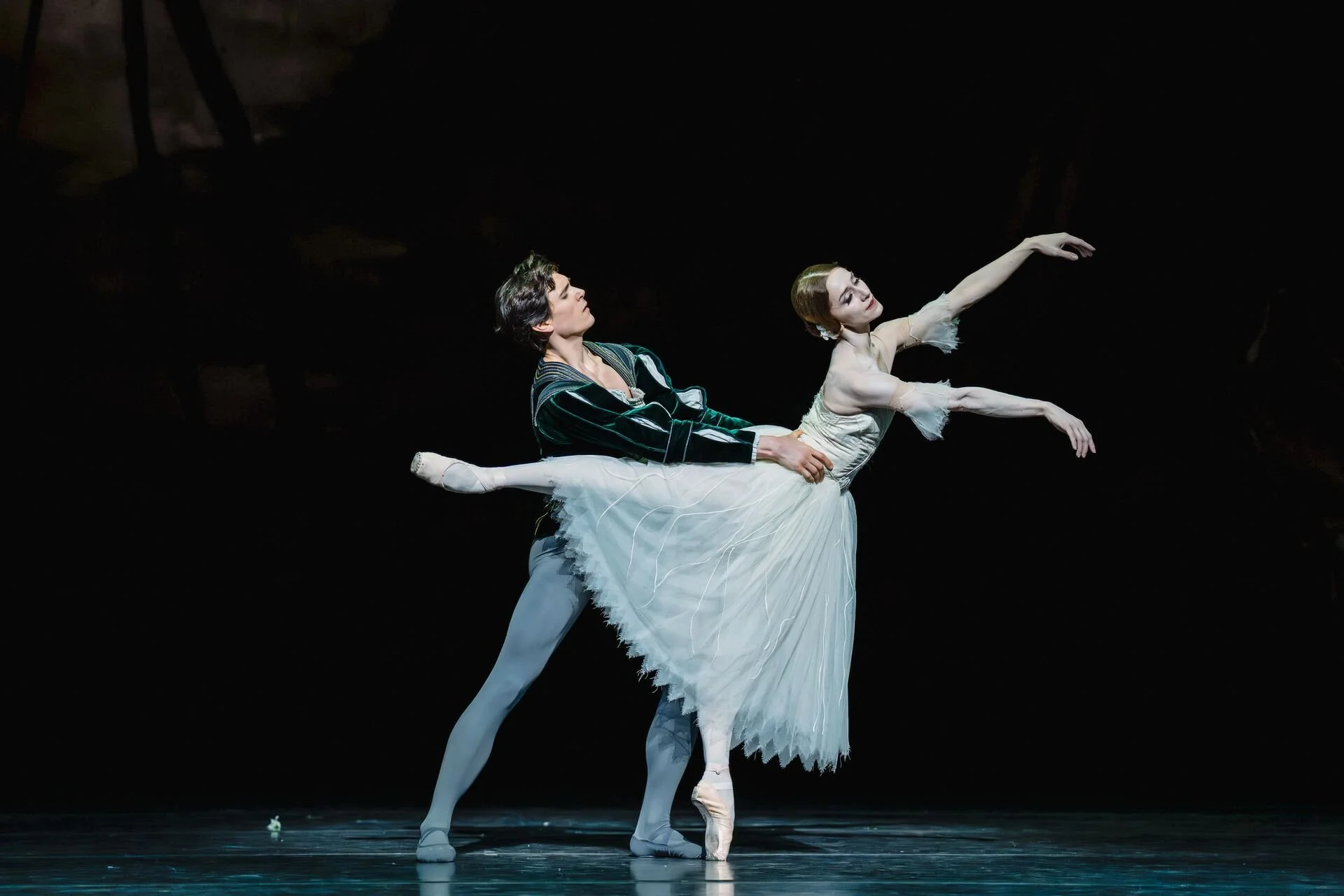
William Bracewell as Albrecht and Marianela Nuñez as Giselle in Peter Wright's production of Giselle © 2026 Helen Maybanks
I was once told on a tour of the Royal Opera House that without lighting a show is nothing: you wouldn’t be able to see it!
And it was during The Royal Ballet’s recent revival of Giselle that I was reminded of this. Because boy was the lighting design effective. It dimmed while intensifying around Giselle as the shock of discovering her boyfriend Albrecht was engaged to someone else hit her. It flashed like lightning as the music intensified when the ghostly Wilis (women who died before their wedding night) tried to make Albrecht dance to death in revenge. Paired with the misty, gauzy quality of John Macfarlane’s set and costume designs, Jennifer Tipton’s lighting (recreated by David Finn) was a subtle but important character in this classic production.
Giselle is one of the most well-known and oldest classical ballets in the repertory. Co-choreographed by Jean Coralli and Jules Perrot in 1841, the work is a gothic romantic tragedy in which Giselle takes her life in the shock of discovering her lover’s betrayal and yet finds it in herself to save him from his own demise at the hands of the man-hating ghosts she finds herself a member of. Being an older ballet, it has moments of heavy mime and long periods of pure dance by side characters, which, while beautiful, can slow down the pace of the narrative. Despite its fame, it’s not the ballet I would start with.
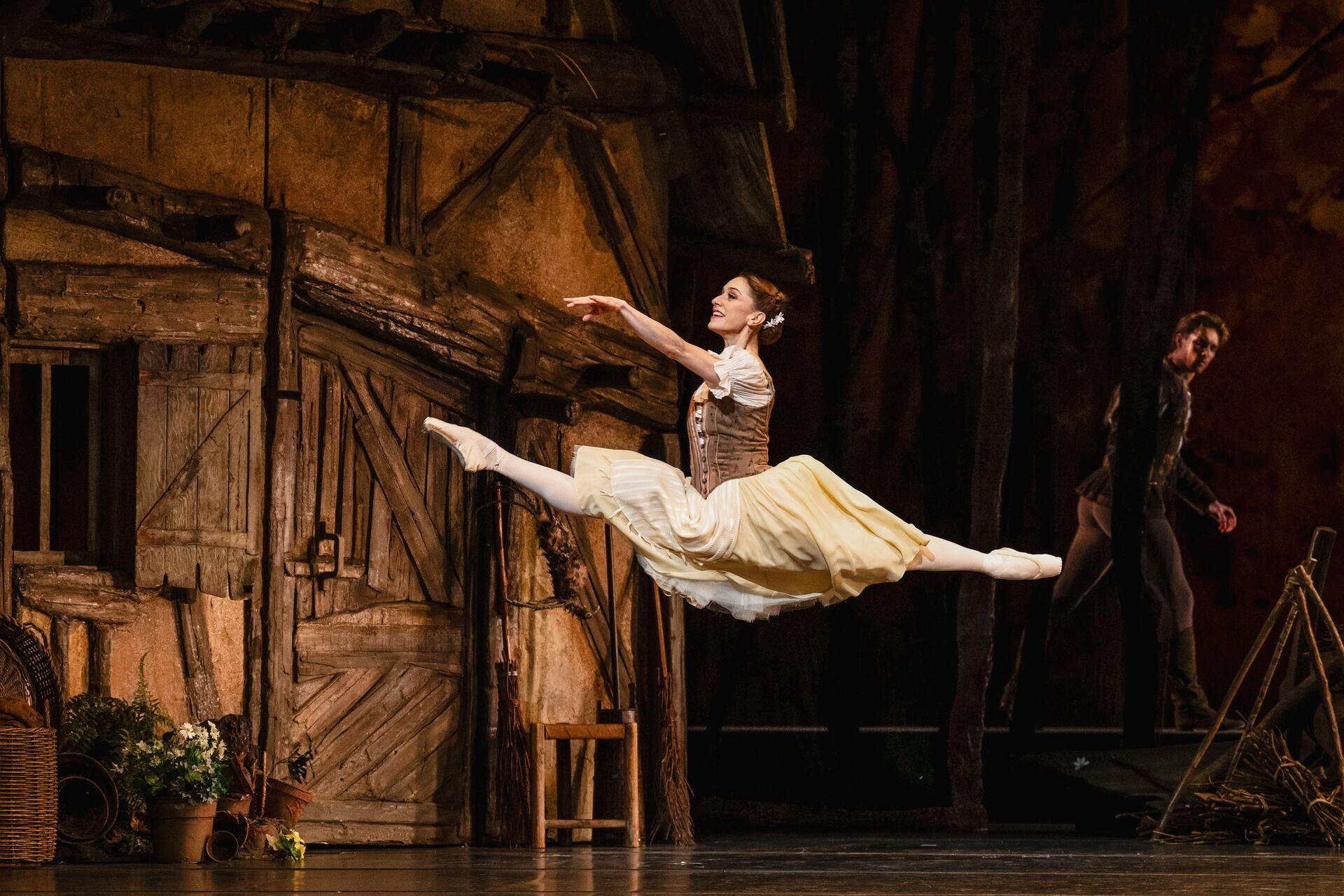
Marianela Nuñez as Giselle in Peter Wright's production of Giselle ©2026 Helen Maybanks
Its emotive heart provides a dramatic outlet for its Principal lead in Giselle, a role experienced dancer Marianela Nuñez takes on with ease. In Act 1 she is a naïve young woman, hopelessly in love with Albrecht despite her mother and friend, Hilarion’s, concerns. She innocently plays ‘he loves me, he loves me not’ (Albrecht sneakily removing a petal after the daisy foretells that he does not) and girlishly dances with her love and the fellow peasant villagers (Joonhyuk Jun and Sae Maeda must be given a special mention for their performances in the peasant pas de six). But when she descends into “madness” after Albrecht’s engagement is revealed, her joy turns to fear, a different interpretation than the classic mania her contemporary Natalia Osipova is famous for. Her acting switches up again for Giselle’s spectral transformation in Act 2, with a softness of movement and a sense that she’s only half present (hot take – a little too much for my personal taste, but I am one for dramatics).
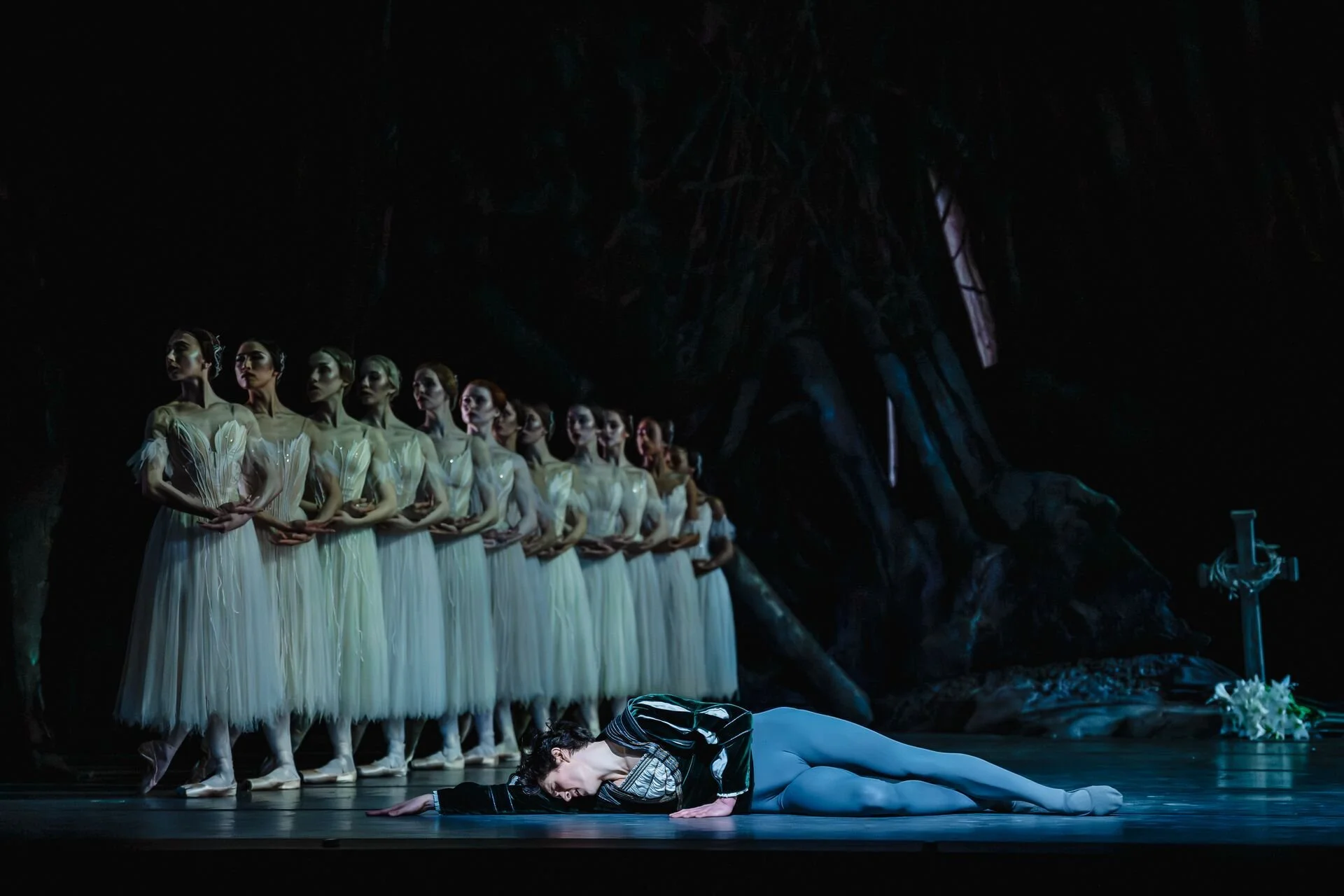
William Bracewell as Albrecht in Peter Wright's production of Giselle ©2026 Helen Maybanks
Conversely, as her deceitful lover Albrecht, William Bracewell struggled to match Nuñez’s expressive acting, especially in Act 1. His was of a much lighter, princely variety which is a common interpretation of classical male roles but resulted in a mismatch of feeling and lack of chemistry. He more than redeemed himself in the second act however. In mourning Giselle and dancing for his life, the role of Albrecht has a lot more to do: Bracewell thrived in dramatic moments of grief and showy moments of choreography. I look forward to reviews of his interpretation of the gritty Count Rudolf in Mayerling this April.
★★★★
Giselle, The Royal Ballet
Royal Ballet and Opera, London
Until 20 March 2026
Tickets →
Ticket bought with own money
Find your next dance show
All dance shows happening across the UK, all in one place. Only on Like Nobody’s Watching.
Check out these related reviews
🪩 Brought to you by Like Nobody’s Watching. Read about our mission →
