
Sweet Mambo, Tanztheater Wuppertal
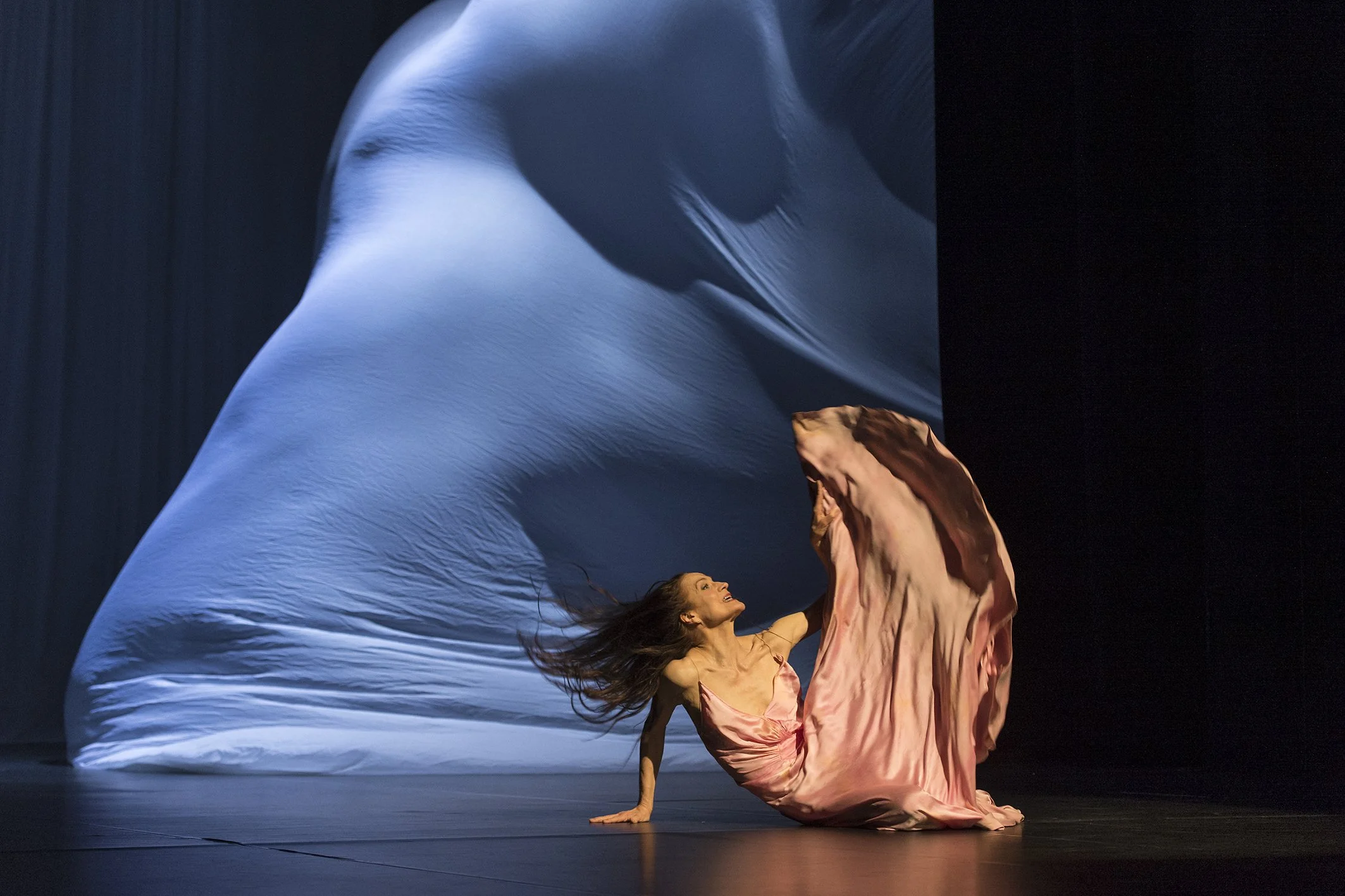
Pina Bausch, Sweet Mambo, © Karl-Heinz Krauskopf
Like all pieces of art, there are some pieces that speak to you and some that simply don’t.
Sweet Mambo was the latter.
The dance theatre work was one of the last created by Pina Bausch, the biggest name associated with the genre (tanztheater in its original German). Although not the originator of the form, which pushed dance further into the abstract with layers of physical theatre and spoken word on top, Bausch popularised the style in the 20th century. You can’t think of dance theatre without thinking of Pina Bausch.
In my dance journey over the last two years, I have fallen for dance theatre through the works of Michael Keegan-Dolan, Jasmin Vardimon and Hofesh Shechter. All their works (that I have seen) have a slightly off-kilter feel and paste together separate motifs, scenes and characters into an abstract story or philosophy. You can clearly see the impact Bausch has had on these choreographers in Sweet Mambo which, despite being choreographed in 2008, holds the style of many of her earlier works (Bausch was choreographing from the late 1960s) including a structural blueprint that many modern choreographers follow.
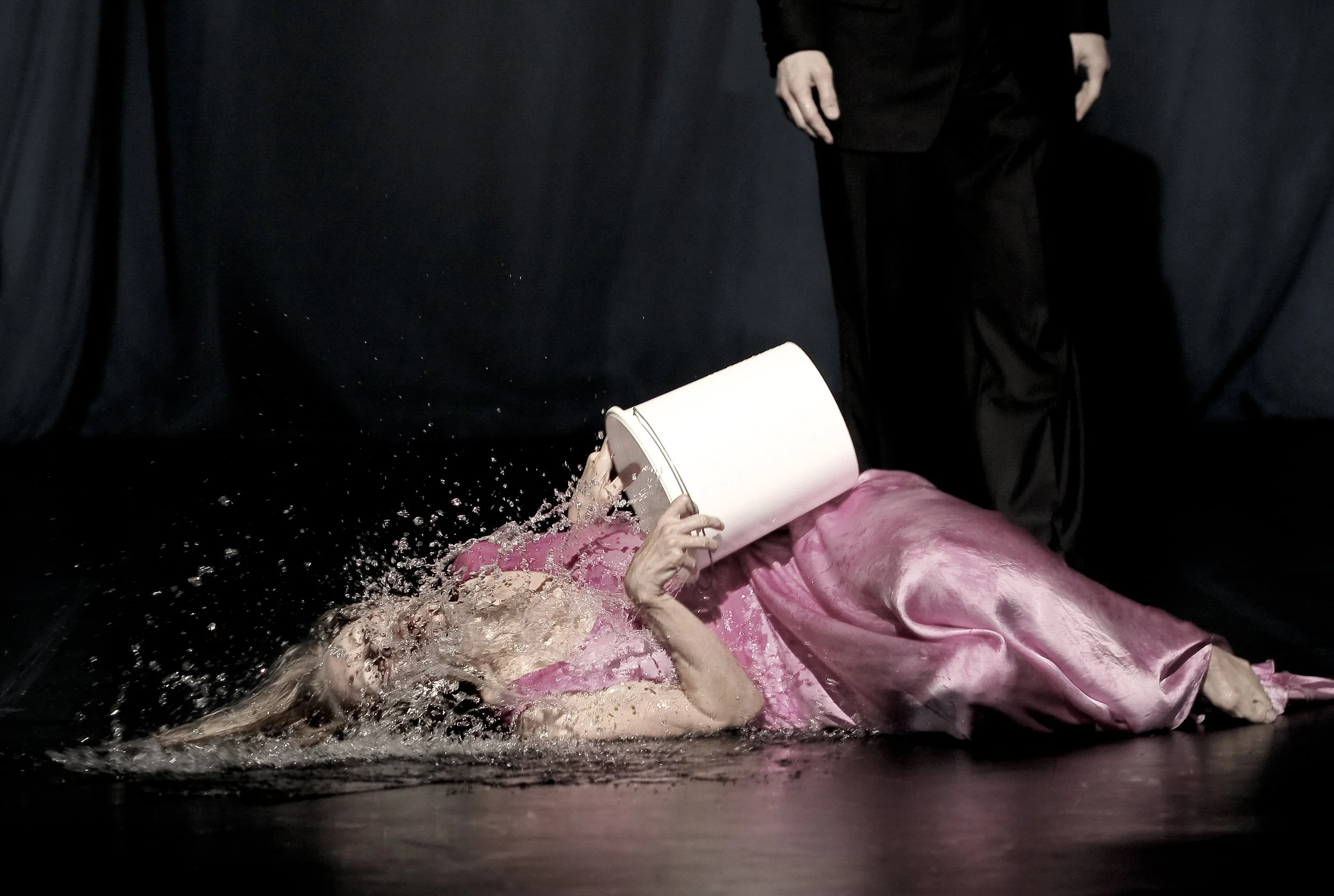
Pina Bausch, Sweet Mambo © Oliver Look
The work opened with a solo from a smiling Naomi Brito, a star dancer of the troupe with enviable long lines and a dazzling smile, before descending into a 1930s-feel soiree, seven ladies in long-line silk dresses and heels outnumbering the three men, more discreetly dressed in black. Throughout the night, the women would break away and introduce themselves (mic in hand), instructing us to not forget their names. They each had individual characters: Julie Anne Stanzak was the smiling hostess asking us to say ‘brush’ to draw our mouth into a smile; Nazareth Panadero gave erratic life advice; Julie Shanahan screamed into a mic on the behalf of an audience member. As with many works of dance theatre, these motifs returned in the second half with more rapid urgency and a level of organised chaos. It was dance mixed with performance art.
The men, notably, had little to do. We never know their names, they don’t really speak. They are props, they are the supporting act, at one point they are seats for the women, covered by scarves cascading from the ceiling. And yet, when they caress the ladies, nuzzle their exposed backs, stroll the soiree, they are like mooching gangsters - hidden, but the power imbalance is undeniable.
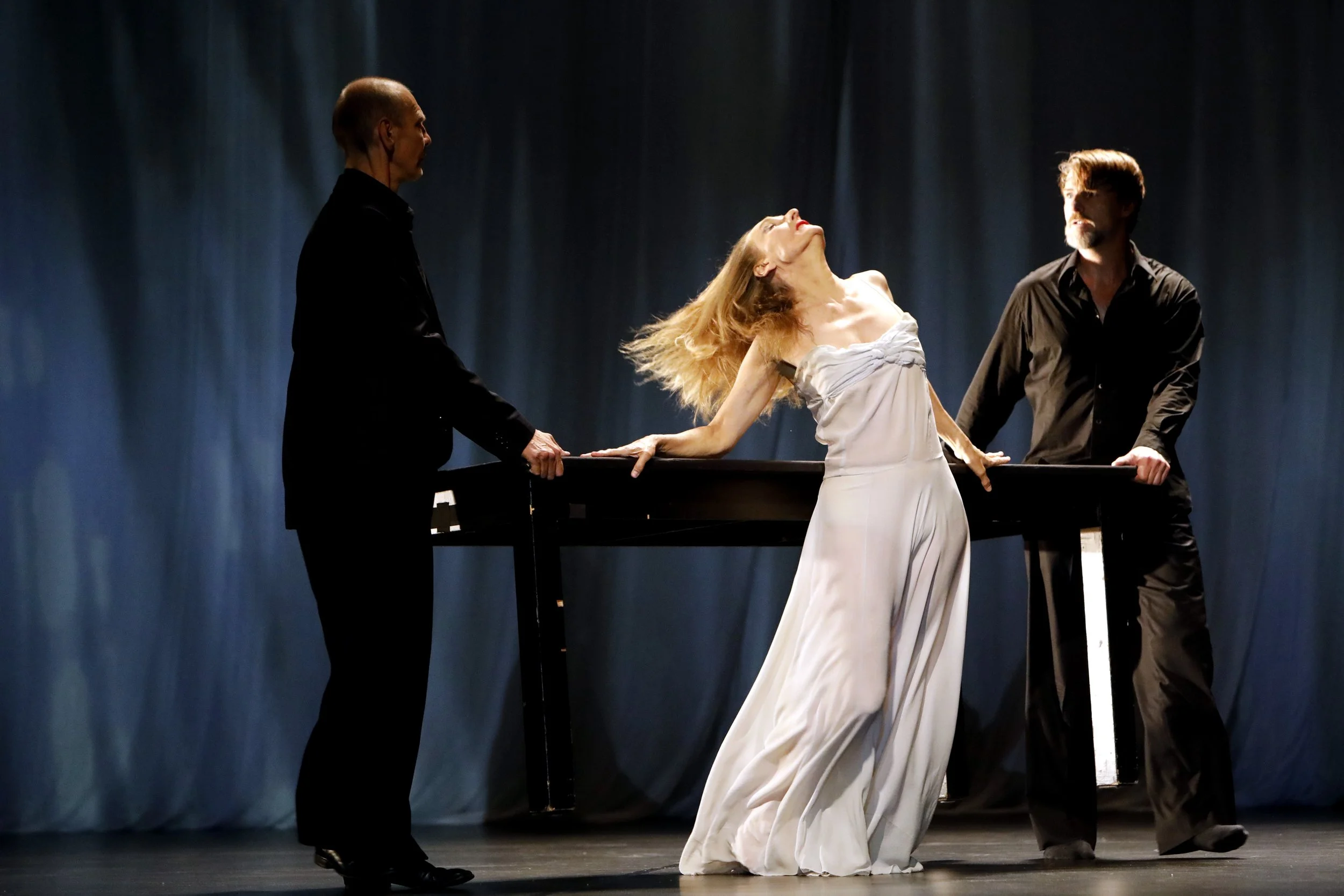
Pina Bausch, Sweet Mambo © Ursula Kaufmann
Disappointingly, this work failed to reveal itself, the various scenes feeling humorous but random. As moments in time they were interesting (a dancer undertaking floor work behind a curtain billowing from side of stage comes to mind), and at times terrifying (a dancer running across the stage and then screaming as she is pulled back by two men), but I couldn’t decipher what Pina wanted us to take away. Why were the dancers desperate for their names to be remembered? What was with the screaming and the sensual semi-undressing? There was so much and yet I couldn’t pin her thought process together or take anything away for myself.
What is notable however was the dancers themselves. The majority of them I would guess were in their fifties or older and have been a part of Tanztheatrer Wuppertal (Pina’s company) for decades. Few companies can claim that level of loyalty to a single company, let alone a single choreographer. If that is what we take from the work’s Sadler’s debut - the legacy of Pina - then that’s quite the statement.
★★★★
Sweet Mambo, Pina Bausch. Performed by Tanztheater Wuppertal
Sadler’s Wells, London / 11 February 2026
Press ticket
Find your next dance show
All dance shows happening across the UK, all in one place. Only on Like Nobody’s Watching.
Check out these related reviews


🪩 Brought to you by Like Nobody’s Watching. Read about our mission →
