
I saw Mayerling four times to judge all the men. This is what I learned.
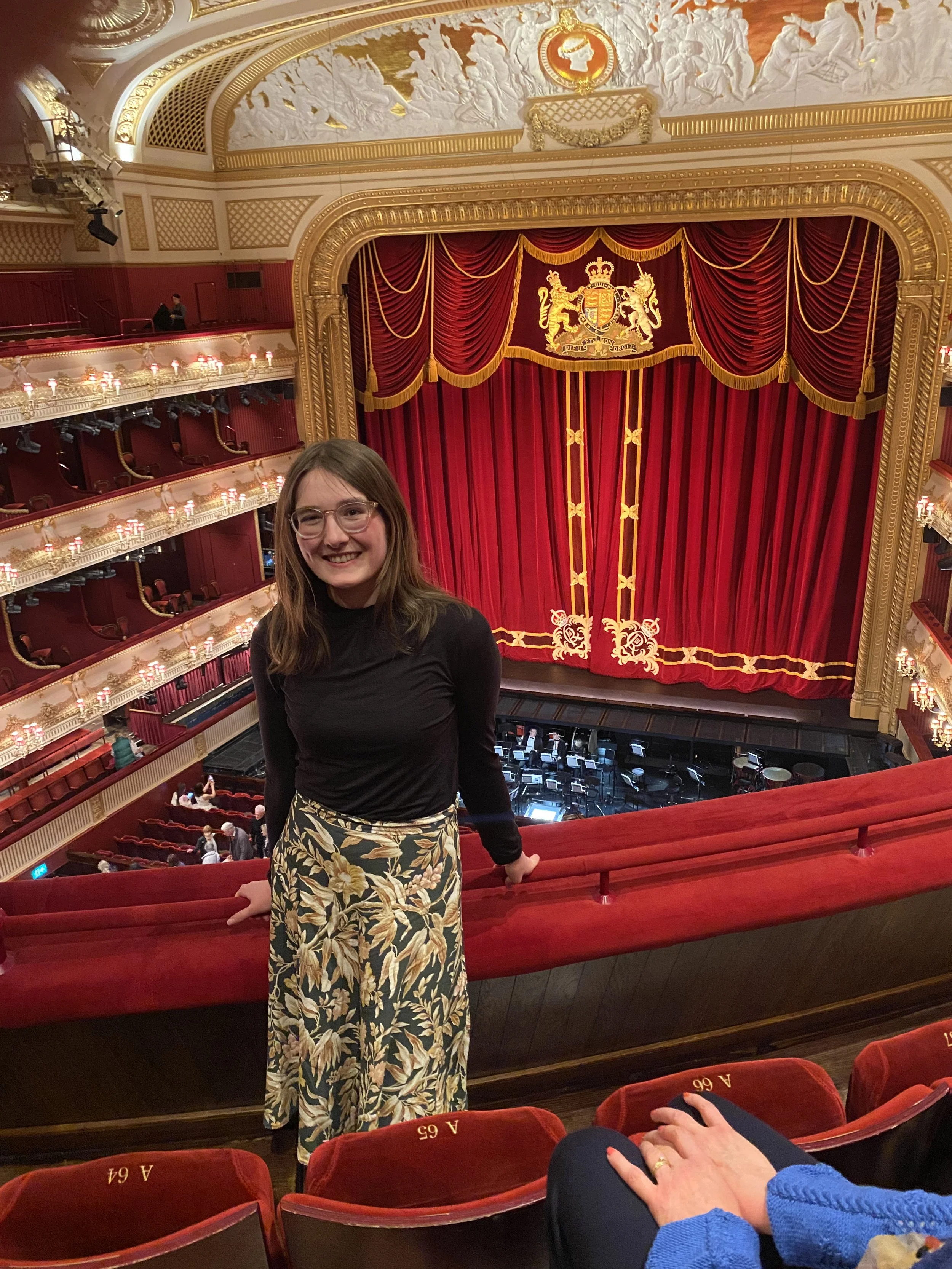
At Mayerling number four © Like Nobody’s Watching
Ballet is one of the few industries in which women dominate.
While men may hold the majority of executive positions in dance companies, on stage nearly all narrative (and non-narrative) ballets are told from the perspective of women. From Aurora to Manon the roles are varied and nuanced and show off a ballerina’s mastery of her craft. In contrast, men’s roles, especially in the classical canon, are supporting characters, only getting to show off their prowess in big duets (grand pas de deux) and with few opportunities to really flex their acting chops.
This started to change in the 1960s when bravura dancers such as Rudolf Nureyev and Mikhail Baryshnikov took to the stage and showed that male dancers could also have starring moments. However, despite this, the biggest opportunity for male dancers is still the 1978 ballet Mayerling. Not a challenge for the faint of heart, Kenneth MacMillan’s ballet is notorious for being the hardest choreography a man can dance on stage. The work is based on, and named after, a royal scandal at a hunting lodge in Mayerling during the final decades of the Austro-Hungarian Empire. There, Crown Prince Rudolf (son of beloved Empress Elisabeth (Sisi) and heir to the throne) carried out a suicide pact with his teenage mistress, the 17-year-old Baroness Mary Vetsera, often described as a romantic willing to die for love. This is a complex tale of a man neglected by his parents (whose affairs he was well aware of); forced into a politically advantageous marriage; disillusioned with his country’s politics (he was involved with the Hungarian separatist cause); and obsessed with death. He took pleasure instead from many mistresses, and relied on morphine for his resulting syphilis. This is not a story easily translated into an art form with no speaking, and many a choreographer has been tripped up by less complex tales.
However, if there was one choreographer who could successfully distill this tragic tale into a work that is easy to follow while analysing who Rudolf was, the reasons he took his life with Mary, and shows the wider messiness of 19th century court life, it’s Kenneth MacMillan. By the time of its premiere, the choreographer had already shown his interest and skill in the psychological analysis of the human condition through dance with Romeo and Juliet, Anastasia and Manon. Mayerling, was his magnum opus. The pinnacle of his life-long choreographic education.

Marcelino Sambé as Crown Prince Rudolf in Kenneth MacMillan's Mayerling © 2026 RBO. Photographed by Andrej Uspenski
And so, to the challenge MacMillan set his male dancers. To dance the near-entirety of a three hour long ballet. To hold enough stage presence to carry the weight of this tale on their shoulders. To complete complex and difficult choreography, including taxing duets with the women in Rudolf’s life and avant garde solos. To portray a morally grey character whose emotions swing from lust to depression as he descends towards the most soul-destroying psychological breakdown and ultimate tragedy.
Not everyone is up to the challenge, and it's certainly not for the faint of heart.
As I discovered when viewing four casts between April and May this year, the ballet’s success is incredibly dependent on your Rudolf of choice.
If you haven’t gathered by now, Mayerling is the ‘not like other girls’ of the ballet world. It is dark and miserable and depraved. It comes with a host of trigger warnings (from depictions of rape to drug use) and is the antithesis of the balletic stereotype of cutesy fairytales and Tchaikovsky swans. This is also the reason I fell in love with this ballet at a cinema screening during university in 2018. It was so different to my understanding of an artform I had a burgeoning obsession with, and I am so in awe of it that for the last four years I’ve slept under a print of the original poster. That 2018 broadcast, starring Sarah Lamb and Steven McRae, set a very high standard for every Mayerling I have seen since (including their own live performance I attended in 2022). However, a better-than-front-row view at the cinema is very different from projecting to the back of a 2,500 capacity theatre. Projection is part and parcel of ballet acting, and I fear this is where a couple of the four casts I saw were tripped up.
Because there is no doubt that Matthew Ball and Marcelino Sambé are excellent dancers. Matthew is well regarded for his Romeo while Marcelino gave a harrowing performance in MacMillan’s A Different Drummer a couple of years ago. Alas, both of their Rudolfs left me feeling underwhelmed. From my Slips seat (where I witnessed Vadim Muntagirov’s breakthrough performance of Rudolf in 2022; distance wasn’t the issue here), I struggled to get a sense of Rudolf’s emotional state beyond what the choreography instructed them to do. In Matthew Ball’s case, the emotional gut punch came out of nowhere in the final third of the ballet, so subtle had his downward spiral been until this point. Meanwhile, while Marcelino actually flirted with the wider cast and helped me finally get meaning from the avant guard solos, in duets his character got sidelined as he focussed on keeping his partner safe when he chucked her between his legs or threw her over his head. I’d like to think that up close it was a different story, alas that is not a view the majority of audiences can afford.
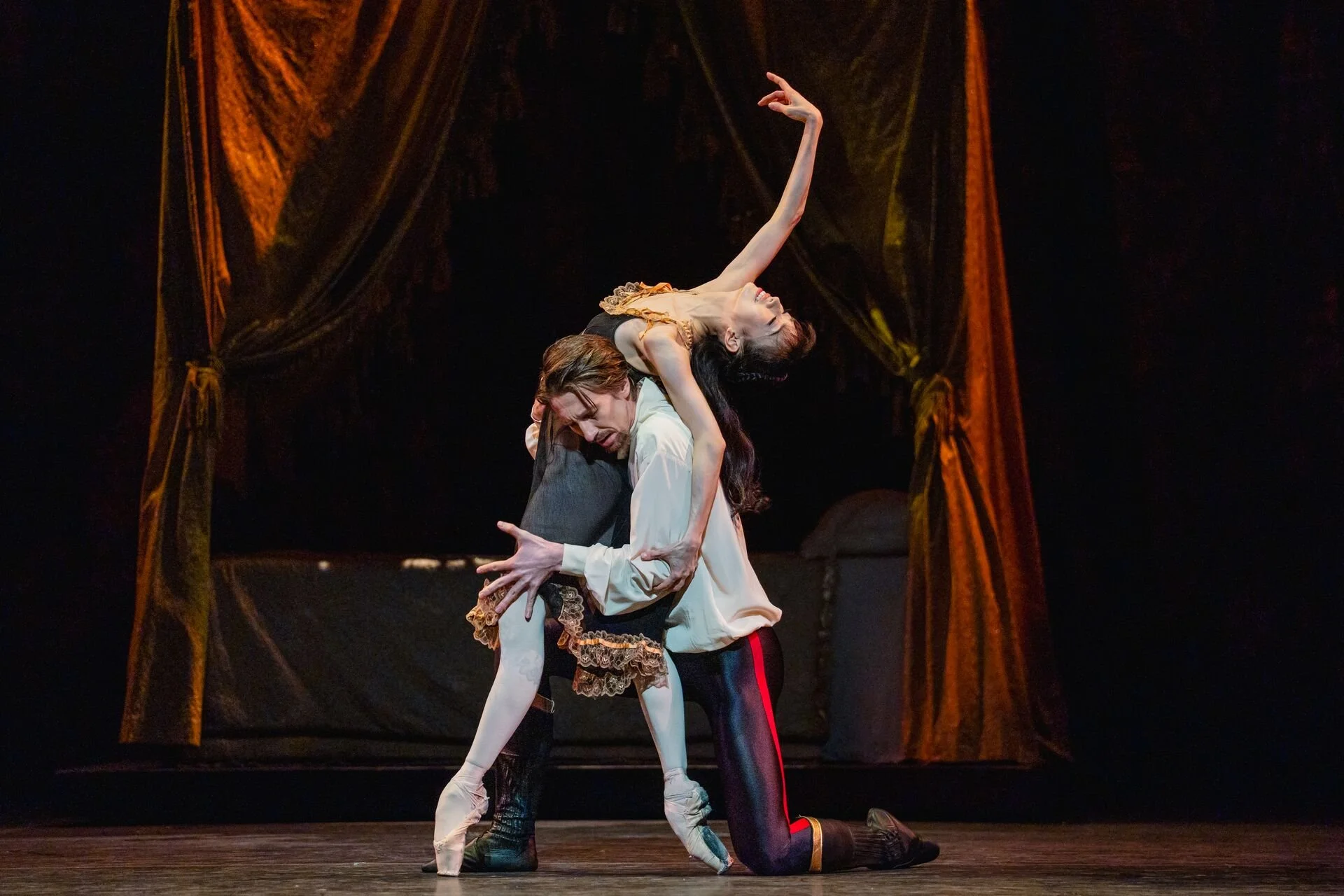
Vadim Muntagirov as Crown Prince Rudolf and Akane Takada as Mary Vetsera in Kenneth MacMillan's Mayerling © 2026 RBO. Photographed by Andrej Uspenski
In contrast, Vadim Muntagirov’s emotional nuance easily found me up in the Amphitheatre with a glasses prescription I’m ignoring needs updating. His was a Rudolf that wasn’t just depressed but experienced the full range of human emotions. A running theme had been Rudolfs who were so despondent in the opening wedding scene that they were expressionless statues staring into the void while women flaunted around them, leaving me very confused as to what allure (beyond being a prince) they saw him. In contrast, Vadim actively engaged with those around him, a favourite moment being where he animatedly pointed at prostitutes to his wife in glee when visiting a tavern (to her disgust, a great moment from Marianna Tsembenhoi). Conversely, during Ryoichi Hirano’s run, Rudolf forced his wife up close to a prostitutes’ spread legs - evidently much is left to the improvisation of the dancers themselves, which makes multiple viewings of this ballet all the more rich.
Of all the couples, Vadim’s Rudolf was the one I felt was actually attracted to Mary Vetsera (Akane Takada). During their first bedroom scene, he flung his arms wide open in lust, welcoming her to him. He was completely at her beck and call. In a Mayerling first for me, I could also sense their love during the final duet. Dare I say that at moments it actually felt like he wasn’t sad enough (or for long enough) in the build up to their deaths. I didn’t actually believe he was going to go through with it, that he had found hope with Mary. Vadim’s interpretation showed off his masterful ability to portray the complexities of the human spirit, but didn’t achieve the overall aim of leaving me sobbing in a broken heap.

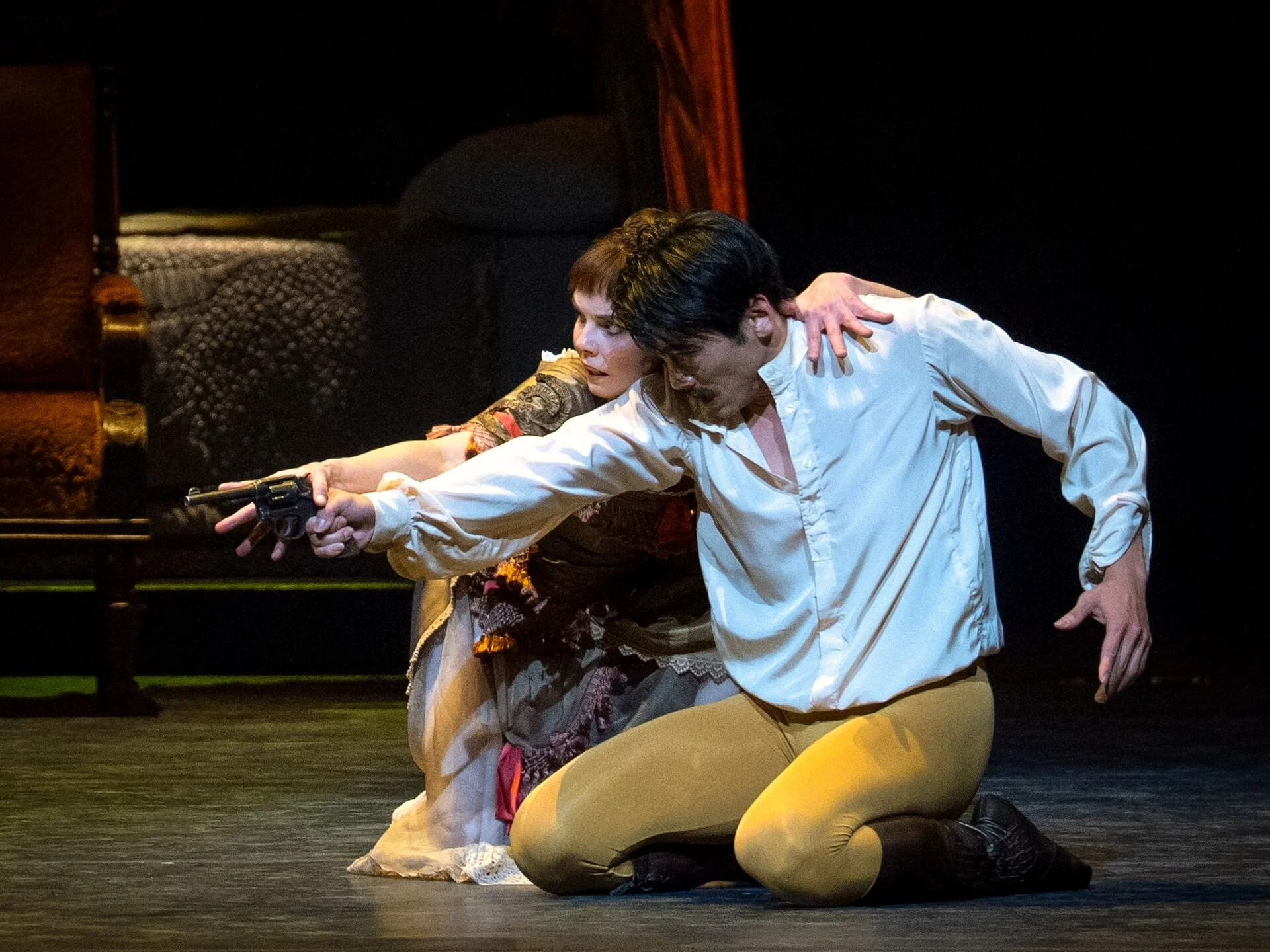
Ryoichi Hirano as Crown Prince Rudolf and Madison Bailey as Princess Stephanie in Kenneth MacMillan's Mayerling © 2026 RBO. Photographed by Andrej Uspenski
The one who did that was Ryoichi Hirano. His Rudolf was a tortured soul you could empathise with, but also someone who was truly monstrous; his assault of his wife left me the most horrified I’ve felt after that scene. He tossed her about as if she was nothing to him, laughed maniacally at her, thrust her onto their bed. It was made all the worse for having seen a truly emotional moment with his mother just moments before where she ignores his begs for empathy. Furthermore, his final duet with Mary (Natalia Osipova) was easily the most spontaneous and desperate of the run. This continuous descent into despair had fantastic emotional payoff - I was left utterly speechless by the curtain call. When he injected himself with morphine, gosh. If I was a crier I would have been looking around for extra tissues.
However, Ryoichi tripped up on two accounts. He lacked the flirtation of Marcelino and Vadim (a surprise and shame as his Espada in Don Quixote was so sexy the Guardian named him ‘Mataphwoar’ - no, really, it made his Wiki page) and his partnership with Natalia Osipova was ill matched. While her interpretation of Mary Vetsera was brilliant, going from girlish to proactively helping Rudolf go through with their pact (she gave my favourite interpretation of Act 3 Mary), her vivacious and wild attack of the earlier choreography didn’t match Ryoichi’s approach to the Act 2 bedroom scene, meaning the duet lacked all-important chemistry.

Natalia Osipova as Mary Vetsera and Ryoichi Hirano as Crown Prince Rudolf in Kenneth MacMillan's Mayerling © 2026 RBO. Photographed by Andrej Uspenski
And it’s this that I learnt more than anything else watching multiple casts of Mayerling. That the rumours are wrong. This is not a one-man-band ballet. The success of Mayerling lies just as much with the supporting cast as it does with the male lead.
I discovered that it takes a woman well-matched to Rudolf to take on the role of Mary Vetsera. As just discussed, Natalia Osipova was my favourite Mary for giving her the most agency and growth (from girlish to mature), but her interpretation couldn’t fully shine alongside a male principal who didn’t match her approach. On the other end of the spectrum, Akane Takada gave a beautiful, more gentle feel to Mary, but she was easily outshone by Vadim; she needed a little more strength of character. For now, the best modern pairing continues to be Steven McRae (who had to pull out of this run due to injury) and Sarah Lamb, a duo who have built a partnership of trust over at least a decade which shines in a daring ballet like this.
More overlooked is the role of Countess Larisch, who is arguably both Rudolf’s rock and enabler. It wasn’t until seeing Mayara Magri and Claire Calvert’s calculating, stately interpretations that I realised how key she is to the plot. An almost matronly figure, Larisch is Rudolf’s ex-mistress and Empress Elisabeth’s Lady in Waiting. Keen to claw back any power she can, she arguably takes advantage of Rudolf’s poor mental state for her own gain, introducing him to Mary (who is a teenager, can she really consent?) and pulling the strings behind the scenes to get them together. She is also the first to support Rudolf when we see him taking morphine after accidentally shooting someone at the beginning of the third act, which leads to his mother telling her to get out during a fiery duet between the pair. It’s another fleshed out character in a host of fleshed out characters and a reminder that nearly everyone in this ballet is morally grey. In less confident hands, she can easily lack the impact she deserves.

Meaghan Grace Hinkis as Princess Stephanie and Matthew Ball as Crown Prince Rudolf in Kenneth MacMillan's Mayerling © 2026 Tristram Kenton
And so brings us to Princess Stephanie, Rudolf’s wife: agreeable, respectable, and horribly taken advantage of. The choreography in her assault scene at the end of Act 1 is some of the most devastating in the ballet canon and controversially one of my ‘favourite’ parts of the ballet (because the choreography is so effective in being vile). While a monstrous interpretation of Rudolf by a dancer like Ryoichi takes the choreography from grim to truly despicable, the right response from the dancer playing his wife shoots it into the abhorrent. Meaghan Grace Hinkis is highly experienced in this role, and my heart was in my mouth during her duet with Matthew Ball. The particular way she shakes her legs in fear when lifted by Rudolf is just devastating, as are her gasps in shock. Up and coming First Artist Ella Newton Severgnini is coming for her crown, however. She stole the show dancing with Marcelino Sambé and helped me to understand why on earth Stephanie continues to run back to Rudolf during their duet: she is begging him to stop.
I often say that the perfect dance work contains a balanced mix of choreography, music and design. Much is joked about MacMillan’s string of brown ballets (due to his long-term collaboration with the designer Nicholas Georgiadis, who often opted for sepia tones), but not enough attention is given to the score, which I came to adore over this marathon (it’s a crime there isn’t a recording). It was compiled and re-orchestrated by John Lanchberry from Liszt’s back catalogue, which is a mighty task and must have taken a long time. The payoff for his efforts is worth however much stress it caused him, because wow it has an emotional punch. I cannot emphasise this enough, the music was not originally written with this ballet in mind, the final score is a patchwork piece. And yet, it portrays joy, indignity, despair, arousal, and devastation better than some custom made compositions. A true testament to the talents of Lanchberry and MacMillan.

Claire Calvert as Countess Marie Larisch in Kenneth MacMillan's Mayerling © 2026 RBO. Photographed by Andrej Uspenski
So, was seeing the same ballet four times in six weeks worth it? Do I still like this ballet? Has it kept its place as a major part of my personality?
I am relieved to announce that despite my trepidation, my love for this piece still stands. I am not bored with it, as I feared I might become. While the ballet has its flaws (the political whisperings are not obvious without a programme and some scenes drag a tad), its many details make it incredibly rewatchable because every time you will pick up on something new. For example, on a first watch Mary and Rudolf’s story can feel like it comes a little out of nowhere, but by watch three you will spot her presence at Rudolf’s wedding during the opening. MacMillan purposefully has her finish her waltz centre stage, so she (most notably, Francesca Hayward) can check Rudolf out as they pass each other. You will also start to pay closer attention to his parents, how his father is particularly dismissive of him (especially if played by Christopher Saunders) or how Rudolf watches from the shadows as his mother flirts with her lover.
The most famous scene for this of course is the Tavern Scene. On a first watch you focus on prostitute Mitzi Caspar as she’s passed between men in a seedy pastiche of the Rose Adage from The Sleeping Beauty. On the second, your eyes are on Rudolf and how he flirts with the women fawning over him as he sits drunkenly. On a third, it's Princess Stephanie and how disgusted she is by the place to the point of being kicked out by Rudolf half way through. On a fourth, fifth and sixth you watch the prostitutes in the background as they flirt and faun and kiss and give lap dances to their clients. On a seventh it's how one particular man (played brilliantly this run by James Large) swaggers about looking at his options for the night. And on the eighth, you follow money passed from Rudolf to the receptionist to pay for his evening.
Throughout this three hour work, the details are continuously spectacular and wholly satisfying. It’s what gives the dancers so much to work with, why this ballet can feel so different in the hands of different casts, and why this is a work of genius.
Would I do this again? I’m already eyeing up Swan Lake for 2027.
Mayerling, The Royal Ballet
Royal Ballet and Opera, London
Tickets bought with own money
Find your next dance show
All dance shows happening across the UK, all in one place. Only on Like Nobody’s Watching.
Check out these related reviews
🪩 Brought to you by Like Nobody’s Watching.
